Yipeng Sun 孙熠芃
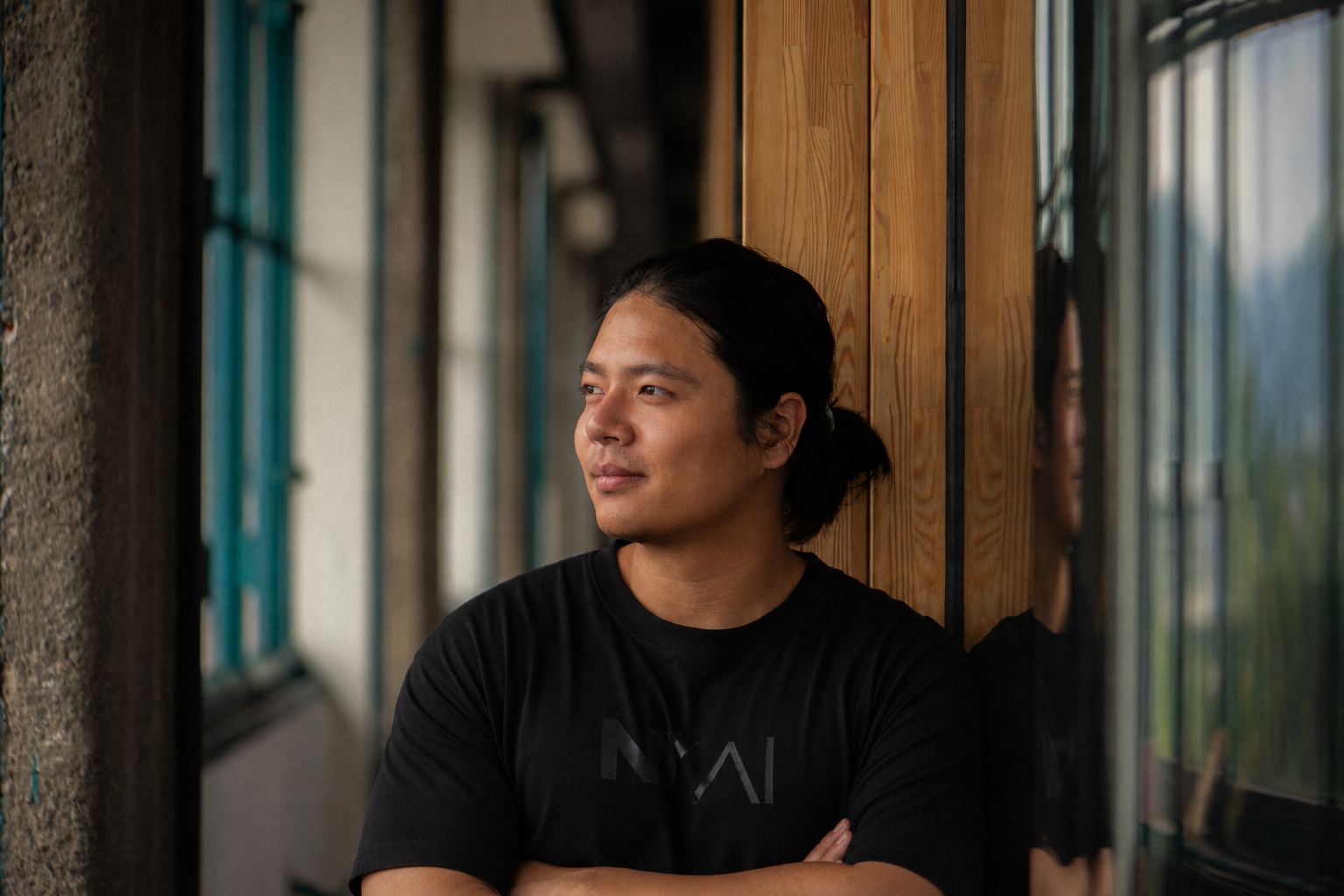
I am a Senior AI/ML Engineer at NXAI, where I develop learning systems for embodied intelligence and Vision-Language-Action (VLA) models. I am also a Ph.D. candidate in Computer Science at Friedrich-Alexander-Universität Erlangen-Nürnberg, working in the Pattern Recognition Lab under Prof. Andreas Maier. My doctoral research brings together perception-action models and physically grounded methods for inverse problems in computed tomography (CT).
Outside of research, I hold an AIDA 4 Master Freediver certification and am a PADI Rescue Diver. 🤿
News
-
SV-FBP robustness is online in Machine Learning for Biomedical Imaging.
-
I joined NXAI as a Senior AI/ML Engineer, working on embodied AI and VLA models.
-
SAM2 Memory System is online in the ACM Digital Library.
-
ViT-Hook is online in Pattern Recognition.
-
LSTT was presented at the MICCAI RIME Workshop.
-
Learning Wavelet-Sparse FDK was accepted at Fully3D 2025.
-
Filter2Noise preprint released.
-
CBCT motion compensation paper accepted at iCT 2025.
-
EAGLE loss paper published in Journal of Medical Imaging.
Selected Publications
-
Filter2Noise: a framework for interpretable and zero-shot low-dose CT image denoising
Y. Sun, L.-S. Schneider, S. Mei, J. Wang, G. Hu, M. Gu, C. Ye, F. Wagner, L. Song, S. Bayer, A. Maier.
Journal of Medical Imaging, 2026.
-
EAGLE: An Edge-Aware Gradient Localization Enhanced Loss for CT Image Reconstruction
Y. Sun, Y. Huang, Z. Yang, L.-S. Schneider, M. Thies, M. Gu, S. Mei, S. Bayer, F. G. Zoellner, A. Maier.
Journal of Medical Imaging, 2025.
-
LSTT: Latent Spatio-Temporal Transformer for Non-rigid Motion Compensation in CBCT
Y. Sun, L.-S. Schneider, A. Schwarz, M. Gu, S. Mei, C. Ye, S. Bayer, A. Maier.
RIME, MICCAI Workshop, 2025.
-
Vision Transformer Hook for Dense Predictions
S. Mei, M. Thies, Y. Xia, Y. Sun, F. Wu, F. Fan, M. Gu, C. Ye, Y. Huang, V. Christlein, A. Maier.
Pattern Recognition, 2026.
Experience
-
Senior AI/ML Engineer
NXAI, Linz, Austria
Researching and architecting embodied AI and VLA model systems, combining model development, system architecture, robust evaluation, and scalable engineering for training, inference, and deployment.
-
Ph.D. Candidate & Project Leader
Pattern Recognition Lab, Erlangen, Germany
Friedrich-Alexander-Universität Erlangen-Nürnberg
Advisor: Prof. Andreas Maier. Research in CT/CBCT reconstruction, denoising, and motion artifact compensation. Responsible for all AI algorithm development in the BMBF-funded KI4D4E project, coordinating across 14 international partners.
-
Researcher
Fraunhofer EZRT, Fürth, Germany
Deep learning for artifact compensation in industrial and scientific tomography. Robust training and inference pipelines for high-throughput CT systems.
-
Research Assistant & Master's Thesis
Anki Lab, Erlangen, Germany
Friedrich-Alexander-Universität Erlangen-Nürnberg
Neural architecture search (NAS) for edge deployment. Genetic algorithm-based NAS and hardware-aware model design for Google Edge TPUs.
Education
-
Dr.-Ing. in Computer Science
Friedrich-Alexander-Universität Erlangen-Nürnberg
Focus: AI in Medical Imaging. Supervisor: Prof. Andreas Maier.
-
M.Sc. in Medical Engineering
-
B.Eng. in Measurement and Control Technology
Nanjing University of Science and Technology
Honor Graduate.
Open Source
- diffct: CUDA-based library for computed tomography reconstruction with differentiable operators.
- Filter2Noise: official code for interpretable, zero-shot low-dose CT image denoising.
- Eagle_Loss: edge-aware gradient localization enhanced loss for CT image reconstruction.
- light-whisper: a lightweight open-source alternative to Typeless.
- AutoCitation: an LLM agent that helps find real citations for writing workflows.
- claude-hermes: a lightweight open-source agent built around Claude Code.
- MTPLX: contributor to an MLX-based LLM inference engine for Apple Silicon.
Résumé
This is my résumé. I also open-sourced the template I built for it.
Service
I review for Engineering Applications of Artificial Intelligence, the SPIE Journal of Medical Imaging, Machine Learning for Biomedical Imaging, Frontiers in Molecular Biosciences, and the MICCAI RIME Workshop.